The Dad Factor
Father wounds, The Boss, Mr. Rogers, discipleship, and the long road back to glory


Dearly Beloved,
To those living in a loud, exhausted, divided age, grace and peace to you.
This year, as I look back honestly, one theme rose above the noise with unmistakable clarity.
Not politics.
Not technology.
Not even the culture wars.
Fatherhood.
Dad.
Across every spectrum I move in, church, community, counseling conversations, friendships, broken homes, thriving homes, fatherhood sits at the root. Quietly shaping outcomes. Leaving fingerprints everywhere. When it is present and faithful, it is powerful. When it is absent, distorted, or abdicated, well, look around. Exhibit A is all around us.
The current culture insists a man is not needed. That fathers are interchangeable, unnecessary, or even obstructive. But lived experience tells a different story. Over and over again, I have seen that Dad matters more than we want to admit. For good or for harm. For strength or for fracture.
It is not getting better.
Not because we lack information.
Not because we lack resources.
But because we have abandoned order.
Scripture warned us this would happen. The prophet Malachi spoke plainly.
“And he will turn the hearts of fathers to their children and the hearts of children to their fathers, lest I come and strike the land with a decree of utter destruction.”
That is not sentiment. That is spiritual law. I have seen it. Those I run with have seen it. History confirms it.
Until God’s people return to Him, and fathers return to their place of responsibility, presence, and humility before God, no policy, platform, or progress will save us.
This year made that painfully clear.
What I have come to understand more clearly is that this is not a new problem, nor is it one without language. I did not arrive at this conclusion alone. Much of what has been clarified for me has been sharpened through the work of BetterMan, particularly their teaching on what they call The Dad Factor.
They state plainly what many are afraid to say. Fatherhood is not supplemental to the family. It is foundational. Dad is essential. Irreplaceable. When a father is present, engaged, and intentional, something forms in a child that cannot be outsourced or replicated. Sons learn how to carry strength with responsibility. Daughters learn how to receive love without confusion. This is not theory. It is observable reality.
BetterMan also names a hard truth we often avoid. Not all dads are the same. Some are absent or disengaged. Some are sincere but unaware of what their children actually need. And some, what they call smart dads, choose intentionality. They pursue understanding. They develop a plan. They invite accountability. They humble themselves before God and others. The difference between these men is not desire. It is direction.
Much of my work has circled this same reality from different angles, legacy, formation, faithfulness, generational transfer. This year simply brought it into sharper focus. The issue beneath so many of our cultural fractures is not masculinity itself, but the absence of formed, present, God-submitted fathers.
And this is where I want to go next, because fatherhood does not exist in a vacuum. It produces fruit. It leaves wounds. It shapes homes, churches, and eventually nations. If we are willing to be honest about what this year revealed, then we must also be willing to examine the kinds of fathers, and sons, we are becoming.
From the group of men I have discipled this year, I have seen something I was not prepared for. Jaw-dropping evidence of father wounds. In the majority. Some bearing deep scars from what they never received. Others now realizing, often painfully, that they have passed wounds on themselves.
There were moments where it felt like I needed to stand on a table and shout, “Are we all seeing this?” Because once you see it, you cannot unsee it. The patterns repeat. The language overlaps. The ache is familiar. Different stories. Same fracture.
I know many of you reading this serve in ministry in some capacity. I need to pause here and say this plainly. If you take nothing else from this reflection, take this. Being an authentic, God-fearing father is one of the most important callings of your life. Behind only your relationship with Jesus and His daughter.
Scripture does not separate fatherhood from marriage. A man’s faithfulness to his children is inseparable from his faithfulness to their mother. Loving her wholeheartedly. Giving himself up for her. Daily. Sacrificially. Quietly. In the way Ephesians 5 describes. As Christ loved the church and gave Himself up for her.
Nothing else competes with this.
No title.
No platform.
No ministry success.
When this order collapses, everything downstream suffers. When it holds, lives are steadied.
And this is where the conversation must go next. Father wounds do not stay contained within families. They shape how men see God, how they lead, how they love, and how they respond to authority. If we are serious about renewal, we cannot treat fatherhood as secondary. It is formative. It is spiritual. And it is urgent.
Let me take this into culture for a moment.
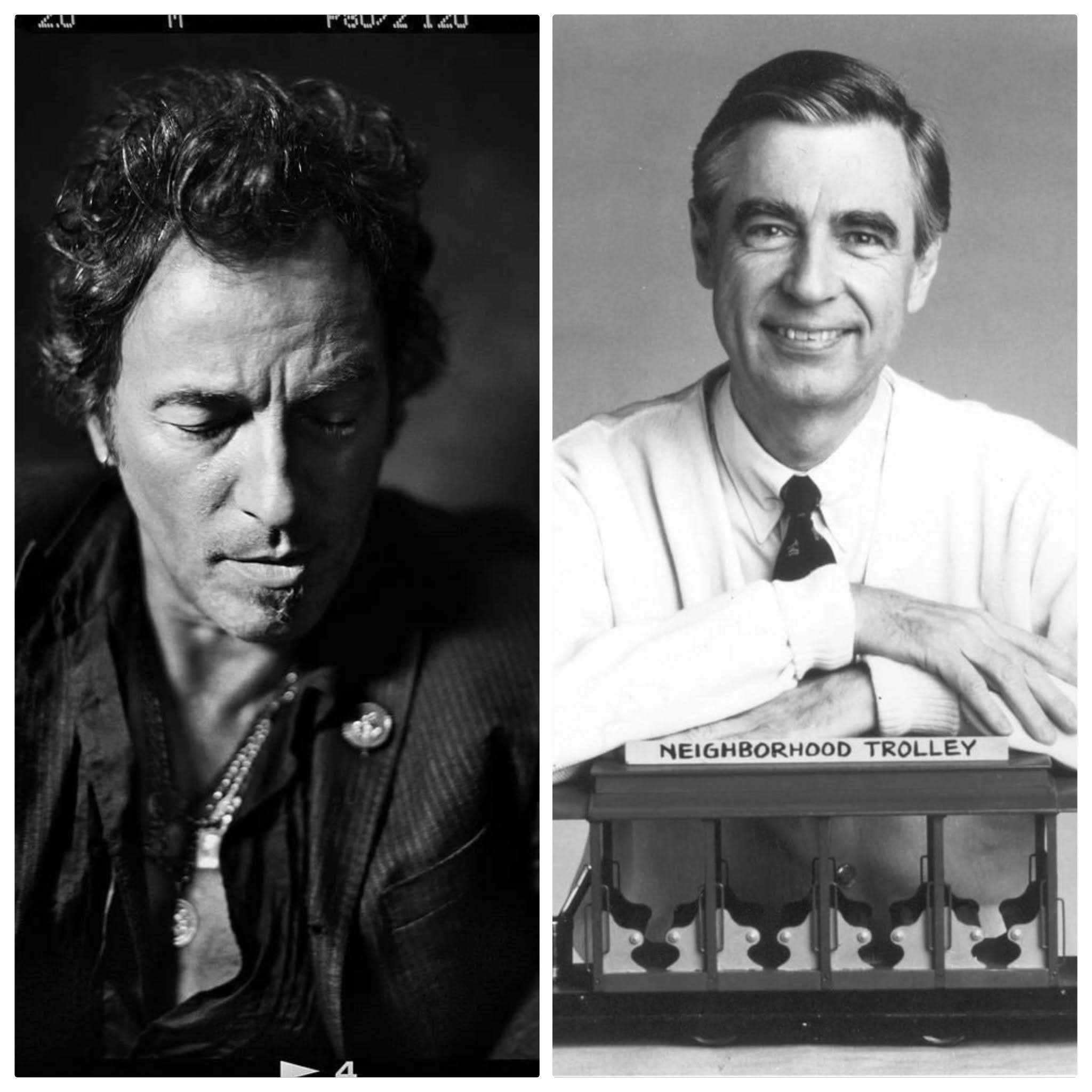
Last night I watched Deliver Me from Nowhere, the film centered on Bruce Springsteen. It’s two hours watching a grown man carry an unhealed father wound. An alcoholic, abusive father scars a young boy, and though the boy becomes a legend, the wound remains untouched.
Yes, he becomes a rock star. He travels the world. Plays sold-out shows. Looks, from the outside, like a man living the dream. But underneath it all, he cannot maintain relationships. Cannot settle. Cannot rest. Success masks the fracture, but it does not heal it.
The album at the center of the story is not about fame or rebellion. It is about pain. Springsteen is channeling decades of unresolved grief, anger, and longing that trace back to one source. His dad. The film doesn’t shy away from how close this took him to the edge. How near he came to doing what so many men do when the weight becomes unbearable. Ending his life.
By God’s grace, he had a faithful friend who intervened and got him help. Therapy helped him name the problem. But naming it wasn’t enough. Healing required something far more vulnerable. At the end of it all, the man still needed to sit on his father’s lap. To be affirmed. To forgive. To move forward.
Scripture says it plainly in Proverbs 17:6.
“Children’s children are a crown to the aged, and the glory of children is their fathers.”
My brother Harp said it best. Where there is no father, there is no glory.
When Springsteen recorded Born in the U.S.A., he had just returned from spending time with his dad, getting him help, beginning reconciliation. He walked into the studio energized, alive, grounded. He told Jon Landau, “Let’s go in there and burn the place down.” And he did.
But even then, there were still things under the surface that had not yet been healed. And the album, like the man, never fully progressed until the wound was addressed.
That’s the part we miss. Talent can carry you far. Success can distract you for decades. But unresolved father wounds always collect interest. And eventually, they demand payment.
I want to close where I did not expect to be undone.
A while back I watched A Beautiful Day in the Neighborhood, the story of Fred Rogers and a cynical reporter assigned to profile him. It becomes clear early on that the assignment is not really about Mr. Rogers at all. It’s about the man sent to cover him. A man carrying deep anger, unresolved pain, and yes, another father wound.
Mr. Rogers sees it immediately. Not with suspicion. Not with judgment. With clarity and compassion.
What follows is not a sermon. It is discipleship. Quiet. Patient. Faithful. Over time, through relationship, presence, and truth lived out in front of him, Mr. Rogers shows this man another way to live. Another way to be whole. Once again, the story is not about success or achievement. It is about healing. About a wounded son being guided toward restoration by a faithful servant of God.
What struck me most, and what I cannot shake, is learning that Fred Rogers was an ordained Presbyterian minister. His television show was his ministry. He was the only one they ever allowed to pastor through public television. The show was his church. And he never once beat people over the head with Scripture. He made the gospel visible. He embodied it. He showed an entire generation of children what it looked like to live like Jesus.
That movie made heaven feel close to me. It made Jesus feel tangible. And it left me with this unavoidable realization. If Mr. Rogers could do it, so can we.
It is possible to lead men out of darkness. It is possible to help them walk a straight and narrow path toward victory. It is possible to lead them to Jesus. But often, the road runs straight through the father wound. You have to show them a Father who is authentic. Present. Safe. Strong. Real.
And here is my favorite part of the story. Fred Rogers was not just gentle on screen. He was an excellent father at home. His wife and children testify to it. And I know this to be true. Your wife and children won’t lie. They are the truest measure of the man you are becoming.
That is the invitation of this year.
That is the work before us.
And that is the legacy that will outlive every platform we build.
Grace and peace.
“For indeed, a house is a little church.”
— John Chrysostom
Powerful thoughts. Thank you. Such a great challenge for daily priorities.