Follow First
Luke 6

There are many lessons the Army taught me, but one has stayed with me more than any other.
Leadership is never about rank. It’s about example.
During my years in uniform, I learned very quickly that men will endure difficult conditions, impossible missions, and exhausting days. What they won’t tolerate for long is hypocrisy. They’ll follow a leader who asks them to do hard things if he’s willing to do them first. They’ll respect a man who admits when he’s wrong, shares the hardship, and never asks his soldiers to go where he refuses to go himself.
I believe it was Command Sergeant Major Don Purdy (look him up… a legend) that said, “Leading from the rear is like pushing spaghetti up hill.” I have to lead from the front. I have to go first.
Hal Moore said in We Were Soldiers, “Because to follow your instincts and to inspire your men, by your example, you have to be with ‘em—where the metal meets the meat.”
But the moment a leader demands one standard from everyone else while exempting himself, he begins losing the trust of the very people he’s trying to lead.
I developed a fierce dislike for hypocrisy during those years. Not because I expected perfection, but because I learned that credibility is earned through consistency. Leadership is built on trust, and trust evaporates when words and actions no longer agree.
The longer I’ve walked with Christ, the more I’ve realized that Jesus was teaching that same principle long before any military academy or leadership book ever did.
In Luke 6, Jesus paints three unforgettable pictures, each building on the last.
First, He asks, “Can the blind lead the blind? Will they not both fall into a pit?” (Luke 6:39, NIV).
Next, He confronts our tendency to judge others while overlooking our own failures: “Why do you look at the speck of sawdust in your brother’s eye and pay no attention to the plank in your own eye?” (Luke 6:41, NIV).
Finally, He reminds us that our lives always reveal the condition of our hearts: “Each tree is recognized by its own fruit.” (Luke 6:44, NIV).
At first glance, these seem like three unrelated sayings. The more I’ve reflected on them, the more convinced I’ve become that they tell one story.
Before you lead, be led.
Jesus was speaking into a culture that highly respected religious leaders. The Pharisees knew the Scriptures. They taught in the synagogues. They were admired for their knowledge and discipline. Yet Jesus exposed a painful reality. They could explain God’s Word without allowing God’s Word to transform them. They possessed knowledge, but they lacked obedience.
That has become one of the most sobering truths in my own life.
It’s possible to know the Bible and still neglect my wife.
It’s possible to teach my children about grace while responding to them without patience.
It’s possible to disciple other men while quietly ignoring sin in my own heart.
It’s possible to become more concerned with appearing godly than actually becoming godly.
Jesus wasn’t just warning me about false teachers. He was warning me about becoming the kind of leader whose public life outpaces his private walk with God.
His next illustration makes that impossible to ignore.
“Why do you look at the speck of sawdust in your brother’s eye and pay no attention to the plank in your own eye?”
I’ve noticed something about myself. I can often identify someone else’s weakness much faster than I can recognize my own. It’s easier to diagnose another man’s pride than confess my own. Easier to critique another father’s parenting than examine my own leadership at home.
Jesus doesn’t tell me to ignore my brother’s speck. In fact, He tells me that after I remove the plank from my own eye, I’ll be able to see clearly enough to help him with his. The issue isn’t whether I should help. The issue is the order.
Repentance must always come before correction.
King David learned this lesson the hard way. After committing adultery with Bathsheba and arranging for Uriah’s death, the prophet Nathan confronted him with the story of a rich man stealing a poor man’s only lamb. David’s sense of justice immediately flared. The rich man deserved judgment.
Then Nathan looked at David and said, “You are the man.”
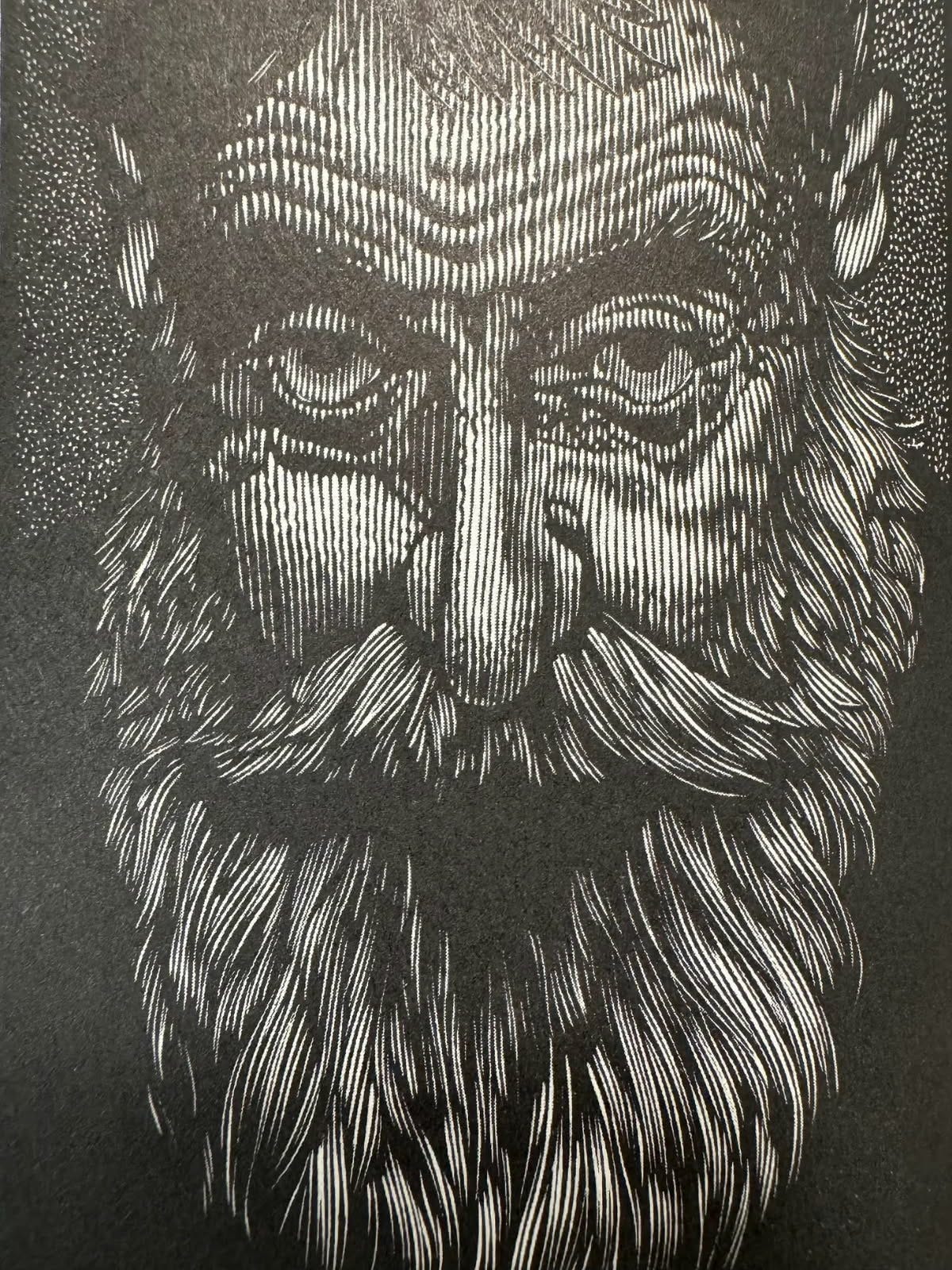
(This image haunts me)
David could clearly see another man’s sin while remaining blind to his own.
Unlike many leaders, however, David did something remarkable. He repented.
He didn’t defend himself.
He didn’t make excuses.
He didn’t shift the blame.
Instead, he prayed the words that every man eventually needs to pray: “Create in me a pure heart, O God” (Psalm 51:10, NIV).
David understood something that Jesus would later teach so clearly.
Everything flows from the heart.
That is exactly where Jesus ends His teaching.
“A good man brings good things out of the good stored up in his heart... For the mouth speaks what the heart is full of” (Luke 6:45, NIV).
Fruit always tells the truth.
Eventually my words, my reactions, my priorities, my marriage, my parenting, and my integrity reveal what is actually happening in my heart.
Our culture desperately needs authentic men.
Not perfect men.
Not louder men.
Not more opinionated men.
Men whose private lives support their public convictions.
Men who are humble enough to repent before they correct.
Men who are willing to examine themselves before examining everyone else.
Men who understand that the greatest sermon they will ever preach is not one delivered from a platform but one lived around a dinner table.
As husbands, our wives need more than our advice. They need our consistency.
As fathers, our children are learning more from what we model than from what we say.
As friends, people don’t need us to have all the answers. They need us to be men of integrity.
I’ve come to believe that the greatest leadership principle I ever learned wasn’t in the Army after all.
It came from Jesus.
Before I can lead my wife well, I must first follow Christ.
Before I can shape my children, Christ must continue shaping me.
Before I can correct another man, I must allow God’s Word to correct me.
Before I can bear fruit in public, my roots must run deep in private.
Leadership has never been about demanding that others follow me.
It has always been about following Christ so faithfully that others can safely follow behind.
Before you lead anyone else, let the Great Shepherd lead you.
Because only the man who continually follows Christ can faithfully lead others to Him.